


BBuying a new system is the easy part. Getting a team to use it well, maintain it and improve it is where most organizations struggle. Training is often treated as a single afternoon after launch, and the knowledge fades within weeks. A better approach treats upskilling as a plan with goals, practice and follow-up.
Begin with a skills map
List the technical tasks your organization needs done well, then rate the team honestly against each one. You may find that a few people already have strong skills that can be shared, and that some gaps, such as spreadsheet modelling, basic data analysis or mapping, are easy to close. A short assessment avoids paying for training people do not need.
Use a simple grid with tasks down the side and names across the top, rated as cannot do, can do with help, or can teach. The grid shows where one person is a hidden bottleneck and who can mentor others. It also gives you a baseline to compare against in three months.
Tie each course to a real task
Generic training rarely sticks. Anchor every module to something the participant will do the following week: build the monthly report, clean the supplier list, publish a field map. When the exercise uses your own anonymized data, people see the value immediately and ask better questions.
A good session ends with a finished piece of work. For example, participants leave with their own cleaned customer list, a working dashboard or a published form. A common mistake is covering ten tools lightly. Teach fewer tools and practice them until they are habits.


Choose the right format
Different needs call for different formats.
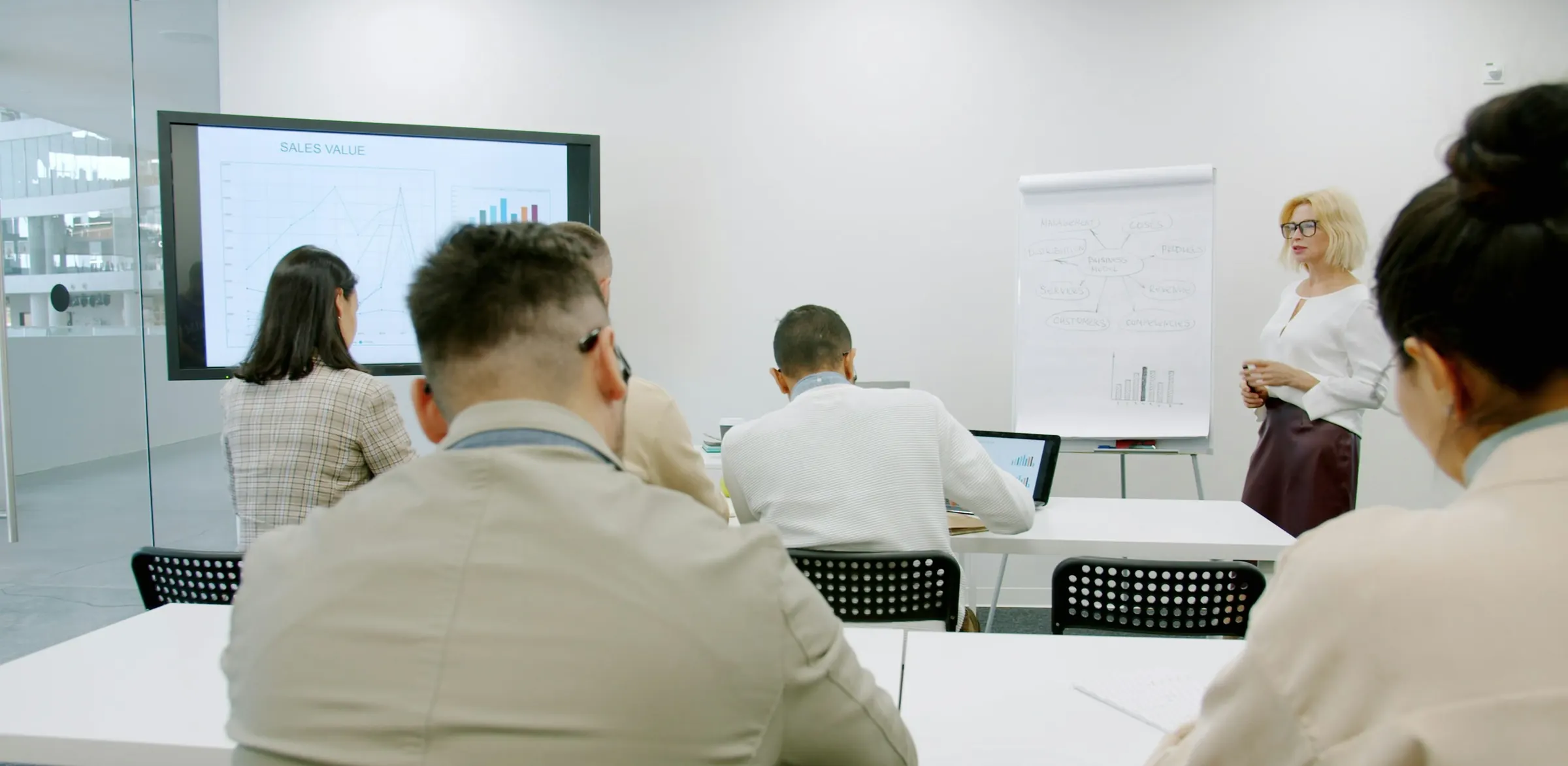
 On-site workshops for a group that needs to change a shared process.
- Short, focused modules for one skill, such as dashboards or form design.
- Coaching alongside a live project, where a specialist works next to your staff.
For many teams in Haiti, in-person sessions work best, with recorded notes and exercises that people can revisit on a phone when connectivity is limited.
Keep groups small enough for the trainer to see each screen. Schedule sessions away from daily emergencies when possible, and keep them short, such as half days, so people can apply what they learn the next morning.
Build internal champions
Pick one or two people per department who will go a little deeper and become the first point of contact for colleagues. They keep the knowledge inside the organization and reduce the need to call outside support for small questions. Give them time in their schedule for this role, or it will not happen.
Give champions a simple mandate: answer first questions, collect issues and report recurring problems. Recognize the role in their objectives. Without recognition, the extra work falls on goodwill and quickly disappears.
- 01
Train to a goal
Tie every course to a task your team must do better.
- 02
Learn on real work
Practice on your own data, not generic exercises.
- 03
Keep the skills
Name internal champions who coach colleagues.
Measure and follow up
Decide what better looks like before training starts: reports delivered in two days instead of five, fewer manual corrections, a team that updates its own map. Check after a month and again after a quarter. Where the change did not happen, find out whether the cause was skills, tools or habits.
Our approach at Atrax is to train the people who will own what we build, so they are not dependent on us after delivery. Whether it is a new system, a data platform or a mapping tool, a team that understands it can adapt it as the business changes.
Repeat the skills grid after the training and compare it with the first one. Share the results with the team and with management. Plan a short refresher session after a few months, when new questions have appeared and the first enthusiasm has faded. Small, regular sessions keep skills active better than one big course.
Next Step
Training pays off when it is tied to a real tool and a real task, and when someone inside owns the knowledge afterwards. If you would like a second opinion before you commit budget, the Atrax team is happy to talk it through. You can reach us through the contact page.

Atrax Team
The Atrax Team is a six-person group of engineers, GIS and data specialists, and designers based in Delmas, Haiti. Atrax has built digital products and field-data systems for Haitian organizations since 2015.